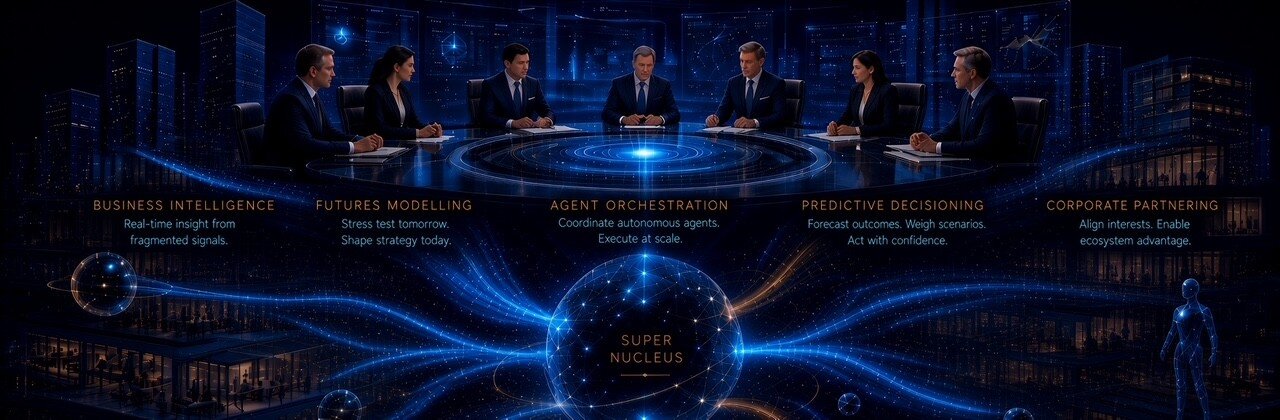



In a world where organisations are now building decision-making models that respond to real-time conditions, and agentic AI is becoming the operating system of modern industry, a strong case exists to move the CRE function ‘up the stack’ — away from administrative throughput and toward the apex of enterprise value creation: strategic intelligence, predictive decisioning, and board-level influence. This article sets out the five core capabilities of tomorrow’s CRE Super Nucleus, the organisatio
The best coders collaborate extensively, it’s why open source exists. In a world where the hottest new programming language is English what friction could be removed by emulating the open source movement ? The corporate real estate profession stands at an inflection point. Artificial intelligence is set to transform what in-house property and facilities leaders can achieve, how portfolios are managed and critically how value in the future is defined. However, the first barrier most teams will
In addition to providing a catalyst for transformational change, the turmoil of the COVID-19 pandemic years provided us with a dress rehearsal for the type of collective action a resilience society will be required to make in order to cope effectively with some of the challenges ahead, including climate change and losses in biodiversity.
During the pandemic I scribbled a few articles exploring some of the potential challenges and reimagination opportunities ahead as we collectively transi
The turmoil of the COVID-19 pandemic years has forced a rethink across the world of work and exposed the Property Industry to a world of innovative disruption.
Whilst limited supply and predictable demand have historically limited the impact of innovative disruption, a fundamental reorientation of the value chain may be on the horizon as asset managers and asset owners start to reshape business practices in recognition that tomorrow’s value creation needs to be fundamentally aligned with t
The Global COVID-19 Pandemic is expected to act as a catalyst for transformational change upending business models everywhere. Whilst limited supply and predictable demand have helped protect the Property Industry from widespread disruption, a fundamental reorientation of the value chain may be on the horizon as the Industry reforms around the ultimate customers of commercial space, i.e. Corporate Occupiers (who are challenged with demands to support increasingly fluid business models whilst als